Our
production process.
Every borosilicate glass component is shaped through a production process that combines artisanal expertise with advanced technologies. From selecting the raw material to performing the most complex operations, each step is designed to ensure precision, functionality, and aesthetic quality. Cutting, blowing, bending, welding, and finishing are carried out with meticulous care and constant monitoring, transforming glass into reliable, safe, and customized technical solutions.
Find out moreThermal shock cutting
Borosilicate glass tubes are cut to size using the thermal shock method: after a diamond incision, the glass is heated and then rapidly cooled, causing it to break precisely along the scored line. The result is a clean, sharp cut.
Re-annealing and flanging
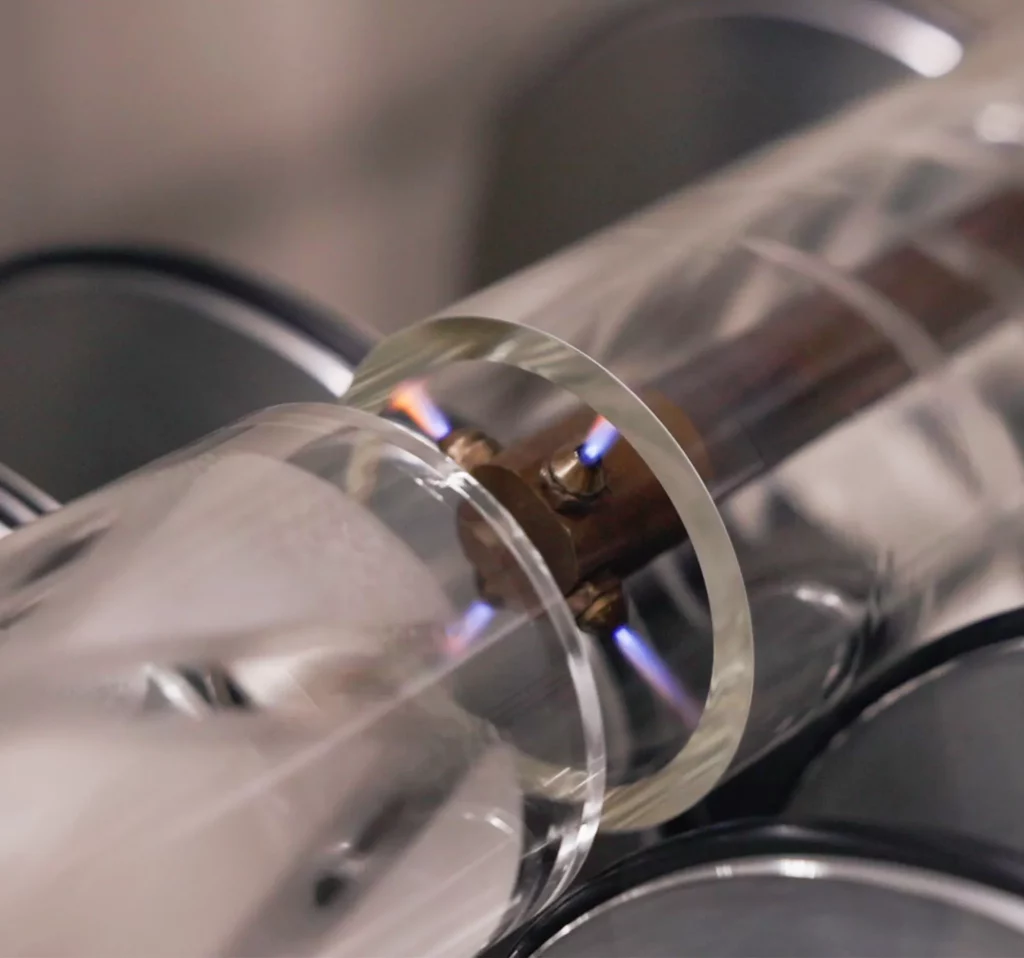
After cutting, the edges of the borosilicate glass tube are manually finished using specialized flames. This process enhances both the strength and the aesthetic quality of the piece. .
Glass blowing
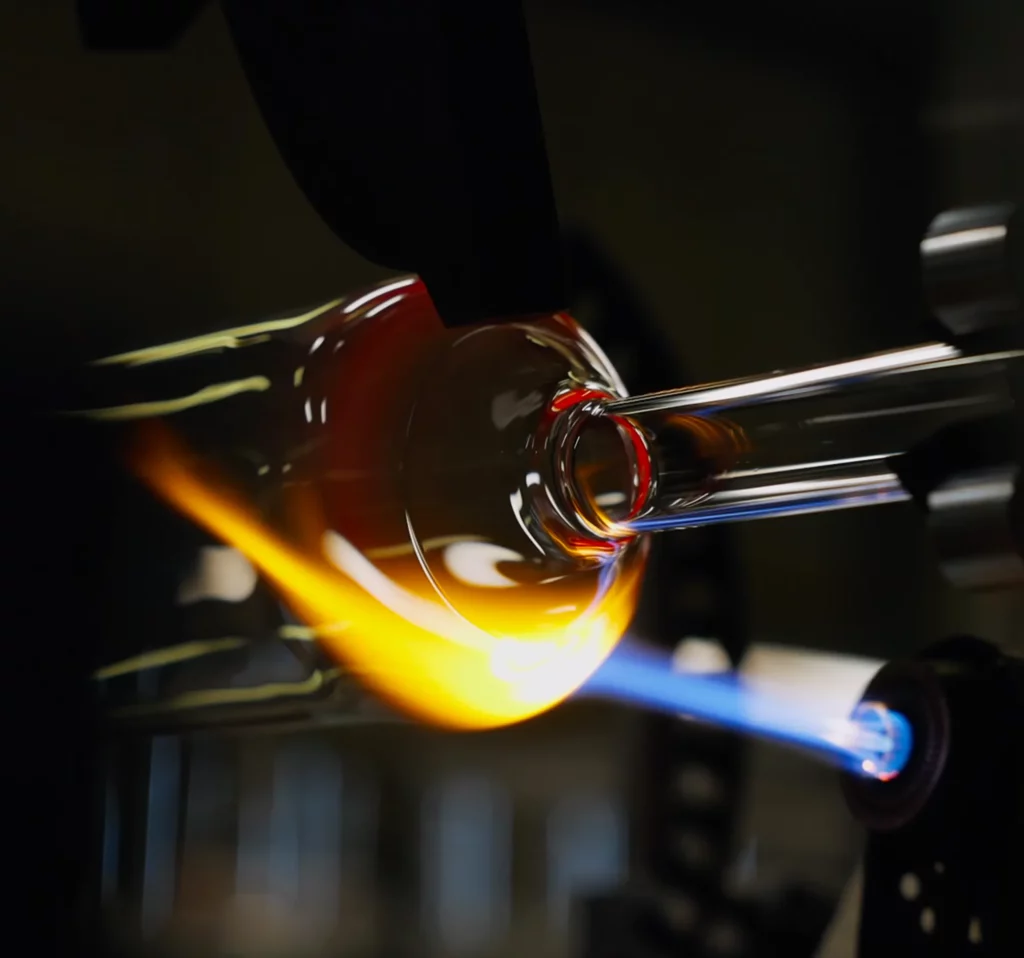
Borosilicate glass is first heated with specialized burners until it reaches a molten state. Once ready for blowing, the glassblower introduces air and shapes the molten glass to fill a graphite mold. A wide variety of shapes can be produced according to the client’s request and technical design.
Welding
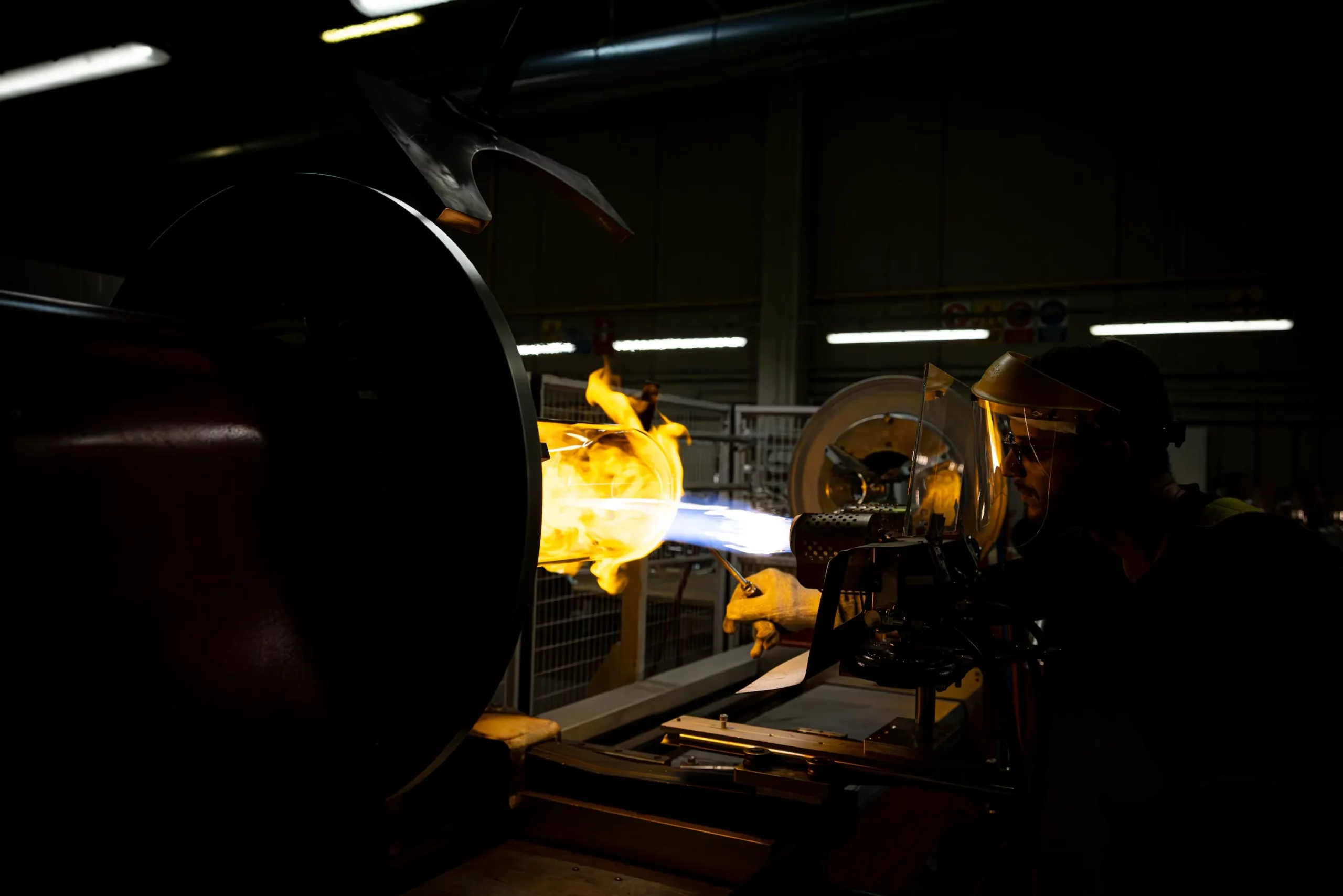
Welding is carried out by joining multiple elements, locally heated with high-temperature flames. This ensures a perfect fusion between the parts, providing structural continuity and maximum strength.
Flat-bottom tube formation
Starting from the tube, a flat bottom is created using a specialized flame and process. The result is a cylindrical body with a stable base and minimal radius, ideal for containers of all types, diffusers, specula, and sight glasses.
Hot drilling
Hot drilling of borosilicate glass can be done in two ways: the first, more traditional method is manual, where material is removed precisely at the point where the hole is to be made; the second, more advanced method uses hydrogen to drill directly at the desired location.
Tube bending
Borosilicate glass tubes are bent through localized heating and controlled rotation of the tube on specialized molds. This process allows precise bends without altering the diameter or compromising the mechanical and thermal properties of the glass.
Male/Female Thread Molding for Lamp Holders
In this stage, male or female threads are formed directly on the borosilicate glass using precision turning processes. The threads are created with specialized tools, ensuring perfectly aligned and functional screw connections with the metal components of the lamp holder.
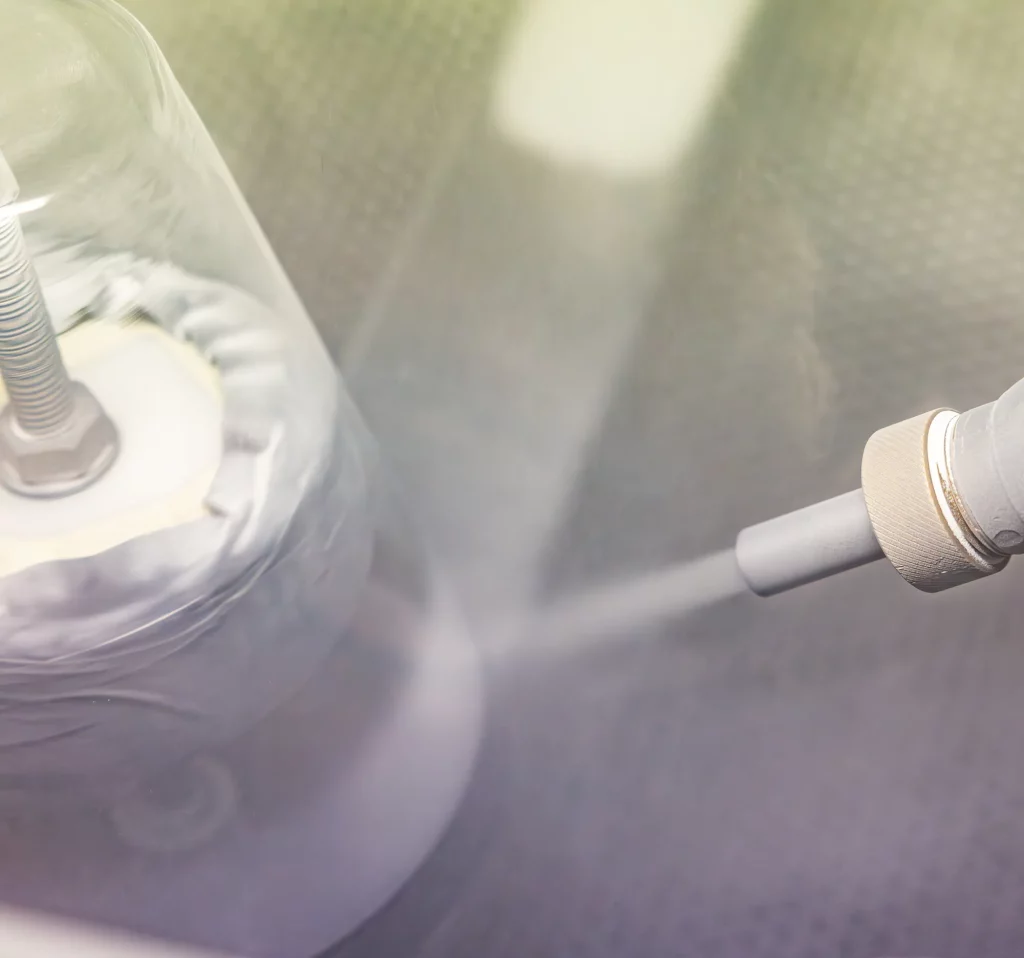
Sandblasting
Sandblasting involves using a high-pressure jet of abrasive grit to matte or decorate the surface of borosilicate glass. This enhances its aesthetic and tactile qualities without compromising its chemical or physical resistance.
Masking
Masking involves applying protective tape along the edges of borosilicate glass to preserve its integrity during processing and transport, preventing chipping and surface damage.
Glass annealing in the oven
Borosilicate glass undergoes a controlled heating process in the oven to relieve internal stresses accumulated during processing. This treatment enhances the dimensional stability and mechanical strength of the finished product.
Quality Control
Each borosilicate glass piece undergoes rigorous visual and dimensional inspections, as well as strength and leak tests, to ensure compliance with production standards and perfect functionality across various applications.
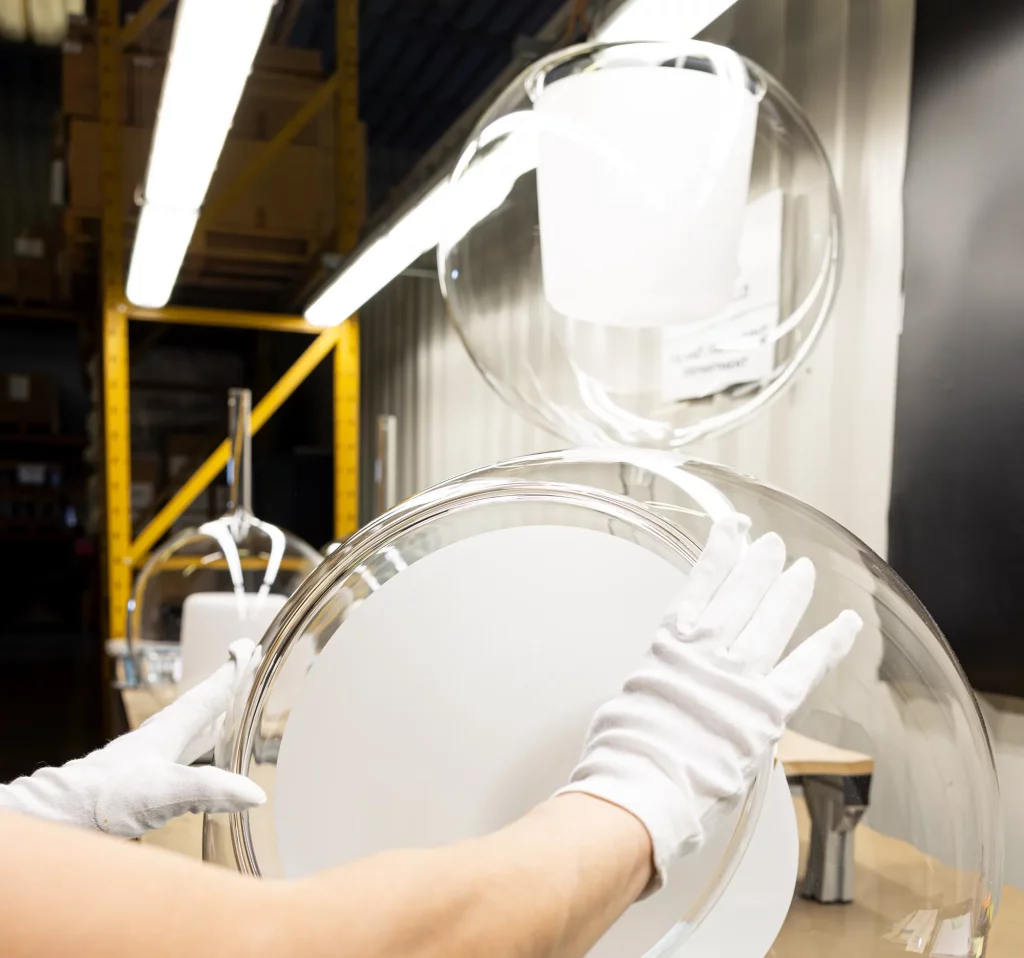
Grinding and Polishing
Grinding removes irregularities and imperfections from the edges of borosilicate glass, while polishing creates a smooth, glossy finish, enhancing both aesthetics and tactile safety.
Cold drilling
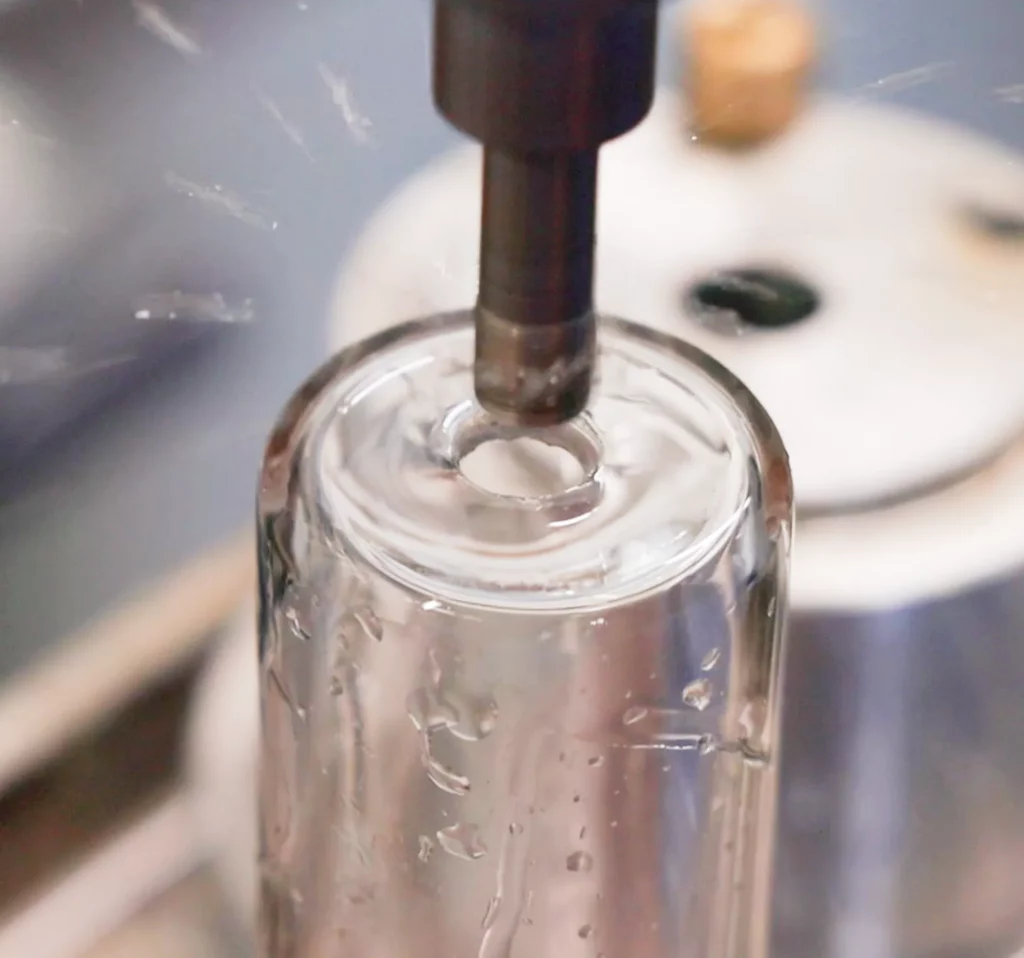
Borosilicate glass is drilled using diamond-tipped bits cooled with a continuous water flow, either manually or via CNC. Positioning jigs are typically used to ensure maximum precision of the hole.
CNC Milling
CNC milling allows the creation of precise and repeatable details. Thanks to numerical control, slots, holes, grooves, and channels can be accurately produced.